


Views: 0 Author: Site Editor Publish Time: 2026-09-11 Origin: Site


Modern construction, transit, and aerospace sectors face an increasing demand for materials that deliver extreme structural rigidity without adding dead load. Engineers and architects constantly battle a persistent trade-off. They must balance stringent fire safety codes, wind load requirements, and structural integrity against project budgets, freight logistics, and installation feasibility. An Aluminum Honeycomb Panel directly solves this challenge. Serving as a high-performance composite solution, this material shifts procurement standards. Global adoption is accelerating rapidly, with the market projected to nearly double from an estimated $3.8 billion in 2025 to $7.3 billion by 2035. This article provides a technical evaluation of its mechanical properties, lifecycle financial impact, and comparative advantages over traditional solid metals and plastic-core laminates. You will learn how to leverage this advanced cladding to optimize structural performance and streamline project execution.
Unmatched Strength-to-Weight Ratio: An aluminum honeycomb panel offers the rigidity of solid metal at a fraction of the weight (weighing roughly 23% of a comparable solid aluminum alloy), directly reducing structural dead load and shipping costs.
Superior Fire and Environmental Safety: Unlike traditional Aluminum Composite Panels (ACPs) with polyethylene cores, pure aluminum honeycomb cores are non-combustible, non-volatile, non-radioactive, and 100% recyclable.
Long-Term ROI Over Upfront Cost: While initial material costs may be higher than standard cladding, the lifecycle financial impact is offset by reduced structural support requirements, lower freight costs, and accelerated installation.
Application Versatility: Proven performance across high-stress environments, including architectural facades, marine bulkheads, aerospace flooring, and cleanroom enclosures.
To evaluate the material's value, specifiers must first understand the structural mechanics. These mechanics allow the panel to outperform solid plate materials. You cannot simply look at the surface. You must examine the internal geometry and bonding techniques that create its unique physical properties. The engineering behind these panels relies on precise mathematical principles applied to metallurgy.
The core utilizes a biomimetic hexagonal cellular structure. This design mimics natural honeycomb formations found in beehives. The hexagonal shape is mathematically proven to enclose maximum space with minimal material. When applied to metallurgy, this geometry distributes shear stress exceptionally well. It prevents buckling under high compressive loads. The continuous network of cell walls supports the outer skins uniformly across the entire surface area.
Panel compressive strength relies heavily on specific core configurations. Three main factors determine this strength: cell size, foil thickness, and alloy grade. Smaller cell sizes increase the density of the core. This provides higher impact resistance and localized load-bearing capacity. Thicker aluminum foil within the cells boosts overall rigidity. Engineers can customize these variables. They tailor the core geometry to meet exact load-bearing requirements for specific projects.
Cell Size (Inches) | Relative Density | Compressive Strength | Primary Application Focus |
|---|---|---|---|
1/4" | High | Maximum | Aerospace flooring, heavy transit bulkheads |
3/8" | Medium-High | Very High | Marine interiors, industrial cleanrooms |
1/2" | Medium | High | Architectural facades, exterior cladding |
3/4" | Low | Moderate | Large-span interior decorative panels |
The top and bottom aluminum skins play a critical role. They handle tensile and compressive forces. This creates what engineers call the "I-beam" effect. In a traditional steel I-beam, the flanges carry the bending loads. The web carries the shear loads. An Aluminum Honeycomb Panel functions exactly the same way. The outer aluminum skins act as the flanges. The honeycomb core acts as the web. This separation of the skins drastically increases the moment of inertia. It delivers massive rigidity with minimal weight.
The entire system relies on adhesive bonding integrity. The skins must remain firmly attached to the core. Manufacturers use aerospace-grade adhesive films, typically advanced epoxies or polyurethanes. They apply these films under high heat and immense pressure. This thermosetting process creates a permanent bond. It prevents delamination even under severe thermal cycling. Poor quality adhesives will fail when exposed to extreme weather. High-quality bonding ensures the panel maintains its structural integrity for decades, passing rigorous peel strength tests before leaving the factory.
Understanding the mechanics leads directly to practical performance benefits. These features translate into measurable operational outcomes. They solve real-world engineering problems across multiple disciplines, from high-rise construction to commercial shipbuilding.
Weight reduction is the primary driver for specifying this material. The comparative data points are definitive. An aluminum honeycomb panel weighs only 9% of an equivalent fiberglass reinforced plastic (FRP) laminate. It weighs just 11% of steel. It weighs roughly 23% of a solid aluminum alloy. You achieve the exact same structural rigidity while shedding massive amounts of dead weight.
This weight reduction translates into major operational outcomes. In transit applications, lighter materials improve fuel efficiency. Trains, ships, and commercial vehicles consume less energy. They carry more payload. In high-rise construction, reduced dead load changes the entire structural engineering equation. You need less structural steel to support the facade. You reduce the load on the foundation. This cascading effect saves significant time and resources during the building phase.
Material Type | Weight per Sq. Meter (Approx.) | Relative Rigidity | Dead Load Impact |
|---|---|---|---|
Solid Steel Plate (5mm) | 39.0 kg | Baseline | Severe |
Solid Aluminum Plate (5mm) | 13.5 kg | Equivalent | High |
FRP Laminate (10mm) | 18.0 kg | Lower | Moderate |
Aluminum Honeycomb (15mm) | 4.5 kg | Equivalent | Minimal |
The cellular core provides excellent environmental control. The hollow air pockets within the honeycomb cells create thermal resistance. Air is a poor conductor of heat. By trapping air in thousands of isolated chambers, the panel mitigates heat transfer. It helps regulate interior temperatures. This reduces the energy required for heating and cooling large commercial spaces, contributing to overall building energy efficiency.
Acoustic attenuation is another major benefit. Solid metal panels transmit sound waves easily. The cellular structure of the honeycomb core disrupts sound wave transmission. As sound enters the panel, the hexagonal cells scatter and absorb the acoustic energy. This makes the material highly effective for noise control. It performs exceptionally well in industrial enclosures, transit interiors, and urban architectural settings where noise pollution is a primary concern.
Safety regulations strictly govern modern construction. Combustible cladding materials pose severe risks. The pure aluminum core and face sheets are inherently fireproof. They do not burn. They do not melt easily. They provide a robust barrier against flame spread, protecting the structural integrity of the building during a fire event.
These panels meet rigorous international compliance standards. They routinely pass ASTM E84 and EN 13501-1 testing protocols. During extreme heat exposure, they do not generate toxic smoke. Toxic smoke inhalation is often more dangerous than the fire itself. Furthermore, the aluminum alloys are completely non-radioactive and non-volatile. They do not off-gas harmful chemicals. This ensures absolute safety in highly regulated environments like hospitals, laboratories, and semiconductor cleanrooms.
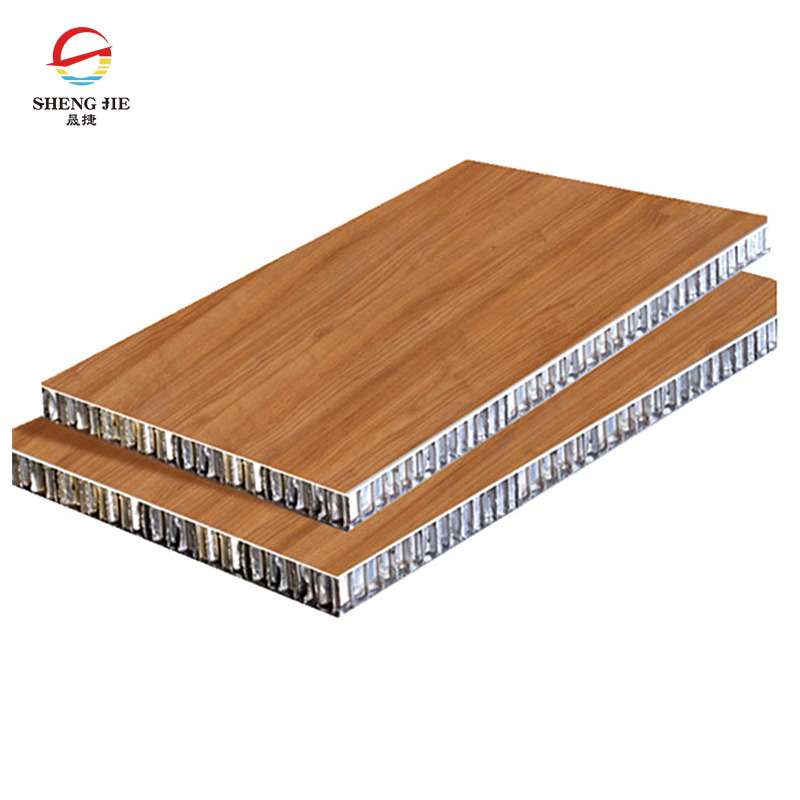
Procurement teams often compare these two materials. Both utilize aluminum skins. However, their internal structures differ drastically. You must evaluate these differences to establish clear procurement guidelines and avoid costly compliance failures down the line.
Traditional Aluminum Composite Panels (ACPs) typically use a solid plastic core. Often, this is polyethylene (PE). Even fire-retardant (FR) mineral cores contain combustible binders. In contrast, an aluminum honeycomb panel features a 100% structural aluminum core. There is no plastic. There are no combustible minerals. The entire assembly relies on metallic structural integrity.
The regulatory landscape has shifted aggressively. Building codes worldwide are moving away from combustible core ACPs. High-profile high-rise fires have forced authorities to ban PE-core panels on tall structures. Honeycomb panels entirely mitigate these compliance risks. They provide a non-combustible alternative that passes the strictest fire safety inspections without requiring complex workarounds or expensive fire-stopping barriers behind the cladding.
Optical flatness is essential for modern architectural facades. Large-format ACPs struggle with dimensional stability. They are prone to oil-canning. This creates a wavy, distorted appearance on the building exterior, especially visible under direct sunlight. ACPs also suffer from thermal bowing. When the sun heats the outer skin, the plastic core allows the panel to warp and deform.
Honeycomb panels maintain superior dimensional stability. The rigid aluminum web locks the skins in place. They do not warp under thermal stress. They do not oil-can. You can specify massive panel sizes without compromising optical flatness. This long-term durability ensures the building maintains its intended aesthetic for its entire lifespan, eliminating the need for premature facade replacement.
Feature | Aluminum Honeycomb Panel | Aluminum Composite Panel (ACP) |
|---|---|---|
Core Material | 100% Aluminum Hexagonal Cells | Polyethylene (PE) or Mineral Blend |
Fire Safety | Non-combustible, No toxic smoke | Combustible (PE) or Fire-Retardant |
Weight | Ultra-lightweight (Hollow core) | Moderately heavy (Solid core) |
Dimensional Flatness | Exceptional across large spans | Prone to oil-canning and warping |
Recyclability | 100% Recyclable (Single material) | Difficult (Requires core separation) |
Evaluating material value requires looking beyond the initial per-square-foot price. You must assess the lifecycle financial impact. Smart procurement focuses on long-term efficiency, reduced maintenance, and installation advantages that offset upfront expenditures.
We must acknowledge the premium initial price point. Manufacturing a complex cellular core requires advanced machinery and aerospace-grade adhesives. Therefore, the upfront material cost is higher than standard ACP or solid steel plating. Budgeting for this material requires a forward-looking financial strategy.
However, longevity offsets this initial expenditure. The material resists environmental degradation. It does not rust. It does not rot. It requires minimal maintenance over a 30-year lifespan. You eliminate the frequent replacement cycles associated with cheaper cladding. The lifecycle value vastly outperforms the initial capital outlay, providing a strong return on investment for building owners and operators.
Logistics heavily influence project budgets. Lightweight panels drastically reduce shipping tonnage. You can fit more square footage onto a single flatbed truck. This cuts freight expenses significantly, especially for remote construction sites or international shipping routes.
Installation advantages further improve the financial equation. Heavy solid metal panels require massive cranes and extensive structural sub-frames. Lightweight honeycomb panels streamline the entire mounting process on the job site.
Unloading: Smaller crews can manually guide panels off delivery trucks without heavy forklifts.
Sub-frame Reduction: The inherent rigidity allows for wider spans between vertical mullions, reducing the total aluminum extrusion required for the substructure.
Hoisting: Lighter panels require smaller, less expensive lifting equipment to reach upper floors.
Mounting: Workers experience less fatigue, allowing them to align and secure panels faster, accelerating the overall construction schedule.
Sustainability now carries a distinct financial value. Traditional composite panels are notoriously difficult to recycle. You must separate the plastic core from the metal skins. This process is expensive and inefficient, often resulting in the material ending up in landfills.
Pure aluminum panels offer massive end-of-life value. They are 100% recyclable without complex separation processes. You simply melt the entire panel down. This provides significant scrap value at the end of the building's lifecycle. Furthermore, specifying this material contributes directly to LEED certification. It helps organizations meet aggressive corporate sustainability goals while recovering capital later.
Different sectors leverage this material based on specific operational demands. Understanding these success criteria helps engineers specify the right panel configurations for their unique environments.
Architects demand aesthetic perfection and structural safety. The primary success criteria here include wind load resistance and large-format panel flatness. High-rise buildings face extreme wind pressures. The rigid core prevents the facade from flexing or failing under these loads. The optical flatness allows for sleek, modern designs without visual distortion. Aesthetic longevity is guaranteed by high-performance PVDF coatings applied to the aluminum skins, which resist UV fading and chemical weathering.
Transportation engineers prioritize efficiency and safety. The success criteria revolve around extreme weight savings. Every pound removed from a ship or train improves fuel efficiency and increases payload capacity. The panels also provide critical vibration dampening. The cellular core absorbs engine vibrations, improving passenger comfort. Finally, stringent fire-toxicity compliance is non-negotiable. Marine bulkheads and train interiors must use non-combustible materials to protect passengers in confined spaces.
High-tech manufacturing requires pristine environments. Semiconductor plants and pharmaceutical labs rely on strict contamination control. The success criteria include non-outgassing, non-radioactive, and non-volatile properties. The panels must not release any particulate matter into the controlled environment. They also offer structural stability. It is incredibly easy to integrate flush doors, viewing windows, and ventilation systems into the rigid panel structure without compromising the cleanroom seal.
Working with advanced composites presents practical challenges. You must address these risks during the design phase to ensure successful project execution and prevent material failure in the field.
Exposed honeycomb cores are susceptible to moisture ingress. If water enters the open cells, it can cause internal corrosion or freeze-thaw damage. This is a critical risk that can destroy the panel from the inside out.
You must mitigate this during the procurement phase. Specify appropriate edge treatments based on the application environment. Leaving the core exposed is never recommended for exterior applications.
Edge Closure Method | Description | Best Use Case |
|---|---|---|
Edge-Banding | A separate aluminum strip glued to the perimeter. | Interior partitions, cleanroom walls. |
Extrusion Framing | Panel slides into a U-channel aluminum extrusion. | Heavy-duty transit floors, modular enclosures. |
Folded-Edge | Front skin folds over the routed core to meet the back skin. | High-end architectural facades, seamless aesthetics. |
Advanced manufacturing takes time. Requesting custom thicknesses, unique cell sizes, or specialized metallic finishes can extend manufacturing lead times significantly. This risks delaying the construction schedule and increasing holding costs.
Engage suppliers early in the design phase. Do not wait until the last minute to source materials. To mitigate delays, standardize panel dimensions wherever possible. Utilizing off-the-shelf inventory or standard production runs drastically reduces lead times. Reserve custom fabrications only for highly specialized architectural features where standard sizes cannot work.
Improper fabrication techniques will destroy the panel. Standard woodworking tools can crush the delicate core. Aggressive drilling can cause localized delamination around fastener holes, weakening the structural connection.
Adhere strictly to manufacturer fabrication guidelines. Utilize specialized CNC routing equipment designed for composite materials. When attaching heavy fixtures, never bolt directly through the hollow core. Use insert potting techniques to create a solid mounting point.
Drilling: Drill a hole through the top skin and into the core, slightly larger than the intended fastener.
Undercutting: Use a specialized tool to rout out a small cavity in the honeycomb core beneath the top skin.
Injection: Inject a high-strength, two-part structural epoxy potting compound into the cavity.
Setting: Place the threaded insert or fastener into the wet epoxy and allow it to cure completely.
Mounting: Once cured, the epoxy forms a solid, crush-proof block inside the panel, ready to accept heavy loads.
An aluminum honeycomb panel represents a higher initial capital expenditure, but its unparalleled strength-to-weight ratio, fire safety, and dimensional stability make it the superior choice for high-performance applications. It solves the critical engineering trade-offs between weight, structural integrity, and strict building codes. Procurement teams should specify these panels when weight reduction, large-span flatness, and non-combustible material requirements are non-negotiable project constraints.
Request technical data sheets (TDS) from manufacturers to verify core density and adhesive specifications.
Order physical material samples to evaluate surface finish, edge sealing, and optical flatness firsthand.
Consult with a structural engineer to run precise wind load and dead load calculations for your specific facade or transit project.
Review local fire codes to ensure your specified cladding meets all non-combustible material mandates.
A: An aluminum honeycomb panel weighs roughly 23% of a comparable solid aluminum alloy sheet. It saves approximately 77% of the dead weight while maintaining the exact same structural rigidity and bending strength. This massive weight reduction lowers freight logistics and structural support requirements.
A: The pure aluminum face sheets and the internal honeycomb core are non-combustible. They will not burn or melt under standard fire conditions. However, the overall fire rating also depends on the specific adhesive films and exterior surface coatings used. Always verify ASTM E84 or EN 13501-1 certifications.
A: Yes, they can be manufactured with single-axis curves. Manufacturers use specialized roll-forming techniques to gently curve the panel without crushing the internal core. However, complex compound curves (bending in multiple directions simultaneously) are extremely difficult and generally not recommended for this rigid material.
A: Standard panel thicknesses typically range from 6mm to 50mm. The most common architectural cladding thicknesses are 10mm, 12mm, and 25mm. Manufacturers can produce custom thicknesses exceeding 100mm for highly specialized structural needs, such as marine bulkheads or heavy-duty aerospace flooring.
A: They perform exceptionally well. The cellular core creates thousands of hollow air pockets. When sound waves hit the panel, the hexagonal structure disrupts and absorbs the acoustic energy. This significantly reduces sound transmission compared to solid metal sheets, making them ideal for noise control.
A: You cannot bolt directly through the panel without crushing the core. Installers use specialized edge extrusions to join panels together. For localized fastening, they use potted inserts. This involves drilling a hole, injecting a hard-curing epoxy, and setting the fastener into the epoxy to prevent core compression.
A: Honeycomb panels offer superior rigidity, lighter weight, and perfect dimensional flatness over large spans without oil-canning. Most importantly, they eliminate the combustible plastic or mineral cores found in ACPs, ensuring absolute compliance with strict high-rise fire safety regulations.


