


Views: 0 Author: Site Editor Publish Time: 2026-09-11 Origin: Site


Modern architectural, industrial, and transit engineering faces a persistent physical conflict. Designers must maximize structural rigidity while minimizing dead load. Specifying traditional solid metal or dense composite panels directly impacts this balance. Heavy materials require massive substructures, limit design spans, and increase foundation requirements. Engineers need materials that provide exceptional strength without the associated weight penalty.
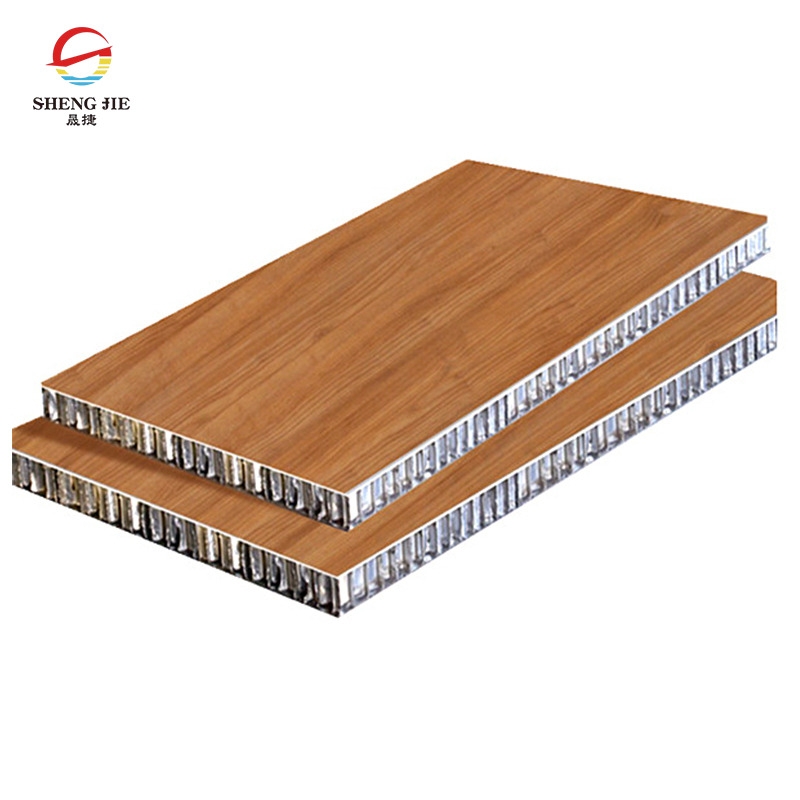
The solution lies in biomimetic composite engineering. An Aluminum Honeycomb Panel resolves this structural conflict by utilizing shear tension and compression mechanics to deliver an optimal strength-to-weight ratio. By separating two rigid face sheets with a lightweight hexagonal matrix, the panel mimics natural cellular structures. This technical evaluation examines how these panels function, their core performance metrics, and the specification variables required for high-performance projects.
Engineered Rigidity: Aluminum honeycomb panels utilize a hexagonal core sandwich structure to achieve exceptional bending stiffness and shear strength at a fraction of the weight of solid aluminum.
Specification Variables: Performance is dictated by three critical variables: the aluminum alloy grade (e.g., 3003 vs. 5052), cell size/foil thickness, and the integrity of the thermoplastic or epoxy bonding adhesive.
Cost-to-Benefit Reality: While upfront material costs are higher than standard solid cladding, the reduction in structural support requirements and long-term durability often yields a lower lifecycle expenditure.
Implementation Risks: Successful deployment requires precise edge closure detailing, appropriate mounting systems, and rigorous verification of adhesive stability to prevent delamination under extreme thermal cycling or moisture exposure.
The structural efficiency of an Aluminum Honeycomb Panel relies on its three-layer composite design. It functions similarly to a steel I-beam. The top and bottom face sheets act as the flanges, while the honeycomb core acts as the web. When subjected to bending loads, the top face sheet experiences compressive stress and the bottom face sheet experiences tensile stress. The core separates these skins, absorbing and distributing shear forces across a wide area. This physical separation exponentially increases the moment of inertia. The result is a panel that resists deflection under heavy loads while remaining incredibly light. In field applications, this means you can span much larger distances between vertical mullions without the panel sagging under its own weight.
The core utilizes a repeating hexagonal geometry inspired by natural beehives. This shape maximizes spatial volume and structural strength while minimizing material usage. The hexagonal matrix distributes shear tension and compression uniformly across the panel. When localized pressure strikes the surface, the interconnected cell walls transfer the kinetic energy laterally, preventing localized buckling. Manufacturers create the core by printing adhesive lines on flat aluminum foil, stacking the sheets, and expanding them into the hexagonal lattice. This expansion process creates a highly uniform, rigid matrix that supports the face sheets continuously. When you cut into one of these panels on a job site, you immediately notice how rigid the exposed foil matrix remains, even without the face sheets attached.
The bonding layer is the most vulnerable failure point in any sandwich composite. The adhesive must transfer the load perfectly between the face sheets and the core. Manufacturers typically use thermoplastic adhesive films or thermosetting epoxies. Thermoplastic films offer excellent elasticity, allowing the panel to absorb thermal expansion without fracturing the bond. Epoxy adhesives provide extreme rigidity for specialized industrial applications. If the adhesive is improperly specified or applied under incorrect heat and pressure during lamination, the panel will fail. The structural integrity of the entire system depends entirely on this microscopic bonding layer. We always verify the peel strength data from the manufacturer before approving a panel for exterior use.
Weight reduction drives the adoption of honeycomb composites across multiple industries. A standard Aluminum Honeycomb Panel weighs approximately one-fifth of a solid steel plate of equal rigidity and one-third of a solid aluminum sheet of equal rigidity. This drastic reduction in dead load transforms large-scale architectural and transit projects. Lighter panels require fewer secondary framing members and reduce the structural load on building foundations. In transit applications, this weight reduction directly translates to improved fuel efficiency and increased payload capacity. When hoisting panels onto a high-rise elevation, the lighter weight significantly reduces crane time and manual labor fatigue.
Separating the face sheets with a thick core increases the panel's stiffness exponentially. Doubling the core thickness increases the stiffness by a factor of seven, while barely increasing the overall weight. This allows engineers to specify massive, continuous flat spans without the risk of bowing or sagging. High-rise facades experience severe positive and negative wind pressures. Honeycomb panels handle these dynamic wind loads effortlessly. They maintain absolute surface flatness across large elevations without requiring dense, heavy secondary support grids. You can often eliminate intermediate stiffeners entirely, which streamlines the fabrication and installation process.
The cellular structure provides exceptional impact resistance. When a blunt force strikes the panel, the face sheet distributes the load across multiple underlying hexagonal cells. If the impact exceeds the yield strength, the core walls crush predictably. This controlled deformation absorbs the kinetic energy, protecting the underlying structural framework. This energy-absorbing characteristic makes the material ideal for high-traffic public transit interiors and industrial enclosures where accidental impacts are common. Unlike solid metal that dents and creases sharply, the honeycomb structure localizes the damage, making panel replacement easier and less frequent.
Beyond raw strength, the physical structure provides several secondary engineering benefits that improve overall building performance:
Acoustic Dampening: The hollow cells disrupt sound wave transmission. This improves the Sound Transmission Class (STC) rating compared to solid metal sheets, making it highly effective for transit hubs and mechanical equipment enclosures.
Thermal Expansion Management: The continuous support of the core eliminates "oil-canning." This is the visible surface distortion common in solid sheet metals under thermal stress. The panel remains optically flat even under direct summer sun exposure.
Sustainability: The aluminum components are 100% recyclable. The lightweight nature of the panel significantly reduces the embodied carbon associated with transportation and structural support materials.
Standard Aluminum Composite Materials (ACM) utilize solid cores made from polyethylene (PE) or mineral-filled fire-retardant (FR) compounds. PE cores are highly combustible and pose severe fire risks in high-rise applications. FR cores improve fire resistance but add significant weight to the panel. In contrast, an Aluminum Honeycomb Panel features a hollow, non-combustible aluminum core. The only combustible element is the microscopic adhesive layer. This makes honeycomb panels inherently safer and easier to specify for strict non-combustibility building codes. When building inspectors review the material submittals, the hollow aluminum core rarely faces the scrutiny that solid polymer cores do.
Standard ACP is relatively flexible. It requires smaller panel sizes or extensive rear stiffeners to maintain flatness under wind loads. Honeycomb panels are fundamentally rigid. They achieve significantly larger flat spans without bowing. Despite this superior rigidity, honeycomb panels often weigh less per square meter than FR-core ACP because the core is 95% empty space. This weight difference becomes highly apparent when you are manually maneuvering 4x8 foot sheets on scaffolding. The honeycomb panel stays rigid and manageable, while the ACP tends to flex and wobble.
Engineers must match the material to the project constraints. Standard ACP is suitable for smaller spans, complex curved surfaces, and projects with lower structural demands where budget is the primary driver. Honeycomb panels are the definitive choice for extreme flatness requirements, high wind load environments, large uninterrupted spans, and strict non-combustible safety mandates. We typically reserve honeycomb for premium facade zones, large canopy soffits, and areas where visual distortion is unacceptable.
Performance Metric | Standard ACM (FR Core) | Solid Aluminum Sheet (1/8") | Aluminum Honeycomb Panel (1") |
|---|---|---|---|
Core Material | Mineral-filled polymer | None (Solid) | Hollow Hexagonal Aluminum |
Weight per Sq. Ft. | Approx. 1.5 - 2.0 lbs | Approx. 1.75 lbs | Approx. 1.2 - 1.4 lbs |
Bending Stiffness | Moderate | High | Exceptional |
Max Flat Span (Unsupported) | Limited (requires stiffeners) | Moderate | Extensive (up to 5ft+) |
Combustibility | Fire-Retardant (Combustible) | Non-Combustible | Non-Combustible Core |
Oil-Canning Risk | Low to Moderate | High | Zero |
The performance of the panel begins with the aluminum alloy. Alloy 3003 is the standard commercial grade. It is highly formable, offers good corrosion resistance, and meets the requirements for most interior and standard exterior cladding projects. Alloy 5052 is a marine-grade specification. It contains magnesium, which provides higher tensile strength and superior resistance to saltwater corrosion. Engineers specify 5052 for coastal architectural facades, marine bulkheads, and demanding aerospace applications. When working on projects within five miles of a coastline, we strictly mandate 5052 alloy for both the face sheets and the internal core foil to prevent premature degradation.
The hexagonal cell size directly influences compression strength and panel weight. Common cell sizes range from 1/4 inch to 3/4 inch. Smaller cells (e.g., 1/4 inch) pack more aluminum foil into the core. This increases compression strength and provides a smoother surface for thin face sheets, preventing the core pattern from telegraphing through. However, smaller cells increase the overall weight. Larger cells (e.g., 3/4 inch) reduce weight but offer lower localized impact resistance. Engineers must match the cell size to the anticipated environmental loads. For high-traffic pedestrian zones, we specify a 1/4 inch cell to resist denting. For high-elevation fascia panels out of reach, a 1/2 inch cell saves weight without compromising wind load capacity.
Surface treatments protect the aluminum face sheets and define the architectural aesthetic. Polyvinylidene fluoride (PVDF) coatings are the industry standard for exterior applications. PVDF provides exceptional UV resistance, color retention, and weatherability against harsh environmental pollutants. Anodized finishes physically alter the aluminum surface, creating a hard, scratch-resistant oxide layer ideal for high-traffic areas. For specialized applications, panels can be customized with perforated face sheets. Perforations allow sound waves to enter the hollow core, significantly enhancing acoustic dampening performance in transit stations and mechanical rooms.
Modern building envelopes demand perfectly flat, large-format panels. Honeycomb composites deliver absolute surface flatness, eliminating the visual distortion common in solid metal facades. Curtain wall systems utilize these panels to handle severe wind loads, seismic drift, and thermal cycling. The lightweight nature of the panels accelerates installation timelines and reduces the structural requirements of the primary building frame. When installing these on a unitized curtain wall, the panels integrate seamlessly into the aluminum extrusions, providing a rigid, weather-tight seal that withstands decades of building movement.
Weight reduction is a critical engineering objective in the transportation sector. Railcar interiors, ship bulkheads, and commercial aircraft flooring rely on honeycomb panels to shed excess mass. Every kilogram removed from a transit vehicle improves fuel efficiency, increases range, and expands payload capacity. The panels provide the necessary structural rigidity to withstand constant vibration and dynamic loads without adding unnecessary dead weight. In marine applications, the combination of 5052 alloy and the honeycomb structure creates partition walls that survive heavy sea states without buckling or corroding.
Controlled environments require materials that are non-shedding, easily sanitized, and structurally stable. Honeycomb panels are utilized for cleanroom partition walls, ceiling grids, and equipment enclosures. The smooth, rigid face sheets withstand aggressive chemical cleaning agents. The sealed edges prevent the accumulation of dust, moisture, or biological contaminants within the core. Because the panels do not require internal stud framing, they eliminate hidden cavities where mold or bacteria could proliferate, making them ideal for pharmaceutical and semiconductor manufacturing facilities.
Unlike solid metal, a cut honeycomb panel exposes the hollow core. This requires precise edge closure detailing. The most common fabrication technique is the "route and return" method. The bottom face sheet and core are routed out, allowing the top face sheet to fold over and seal the edge. Alternatively, fabricators use extruded aluminum edge banding bonded with structural adhesives. If edges are improperly sealed, moisture can ingress into the core. This moisture can freeze, expand, and destroy the core structure, or initiate internal galvanic corrosion. We always inspect the corner folds on site to ensure the sealant is continuous and the core is completely isolated from the environment.
Rigid panels require mounting systems that accommodate thermal movement. If a panel is rigidly bolted to a frame, thermal expansion will induce stress fractures at the fastening points. Engineers specify cassette systems, Z-clip extrusions, and concealed fastening methods. These systems allow the panel to float independently of the substructure. They absorb thermal expansion and contraction without transferring stress to the panel face or the adhesive bond. During installation, we ensure the Z-clips have adequate slide clearance. If the clips are bound tight, the panel will eventually warp or pop the rivets when the summer sun hits the facade.
Delamination is the catastrophic failure of the adhesive bond between the face sheet and the core. This is caused by poor adhesive application, extreme temperature fluctuations, or moisture ingress. To mitigate this risk, specifiers must require rigorous quality control documentation. Panels must be tested to ASTM standards for peel strength and accelerated aging. Procurement should prioritize manufacturers that utilize continuous lamination processes with aerospace-grade thermoplastic adhesives. We reject any batch of panels that arrives on site showing signs of edge bubbling or inconsistent lamination pressure.
While the aluminum components are non-combustible, the adhesive layer introduces a combustible element. Engineers must evaluate the total calorific value of the panel system. The specified panel must meet local building codes and fire safety regulations. This includes passing rigorous assembly tests like NFPA 285 in North America or achieving an A2/A1 classification under EN 13501-1 in Europe. Verification of these independent testing certificates is mandatory before installation. You cannot assume a panel is fire-safe just because it has an aluminum core; the specific adhesive formulation dictates the final fire rating.
Aluminum honeycomb panels are highly specialized engineered composites. They are the definitive choice when project constraints demand maximum rigidity, absolute surface flatness, and minimal dead weight. By understanding the mechanics of the sandwich structure, engineers can leverage these panels to push the boundaries of modern design. Base your procurement decisions on specific environmental loads, required span distances, and strict adherence to fire safety codes. Prioritize manufacturers that provide transparent peel-strength testing data and utilize high-grade thermoplastic adhesives.
To move forward with implementation, follow these steps:
Consult with a structural engineer to run precise deflection calculations based on manufacturer-provided load tables for your specific wind zones.
Request physical panel samples to evaluate the quality of the edge closure methods and the compatibility of the mounting extrusions with your framing system.
Verify the manufacturer's warranty terms specifically regarding delamination under local thermal cycling conditions.
Review independent fire testing certificates to ensure compliance with local non-combustibility building codes before finalizing the specification.
A: Panel thickness typically ranges from 6mm to 50mm. The thickness dictates overall rigidity. Because the core is mostly empty space, increasing thickness exponentially improves bending stiffness without significantly increasing total weight. We usually specify 25mm for standard exterior facades to balance wind load resistance and framing compatibility.
A: Panels are cut using specialized CNC routing equipment or cold saws. Joining requires specific techniques to address the hollow core. Fabricators use mechanical fasteners combined with structural adhesives, extruded aluminum edge profiles, or the route-and-return folding method to create seamless, weather-tight joints.
A: The aluminum face sheets and core are non-combustible. However, the adhesive used to bond them is combustible. High-quality panels use minimal, specialized adhesives to achieve strict fire ratings, such as EN 13501-1 A2 or A1 classifications. Always verify independent testing certificates before installation.
A: Delamination occurs when the adhesive bond fails. This is primarily caused by substandard adhesive application during manufacturing, moisture ingress through unsealed edges, or extreme thermal shock. Specifying panels with high peel-strength ratings and ensuring proper edge sealing mitigates this risk.
A: There is an inverse relationship between cell size and compression strength. Smaller cells pack more structural walls into a given area, increasing compression strength and impact resistance, but adding weight. Larger cells reduce weight but lower the localized crush resistance.
A: Yes, but with limitations. Panels can be manufactured with a single-axis curve using specialized roll-forming equipment. However, tight radiuses are difficult to achieve because excessive bending forces will crush the internal hexagonal core structure and compromise the panel's integrity.


